In overseas highway guardrail procurement projects, the most critical factor affecting service life is the hot-dip galvanizing quality. Many low-cost guardrails get rusty, peeling and white spots within 1–2 years, which is not caused by steel thickness, but by unqualified galvanizing treatment.
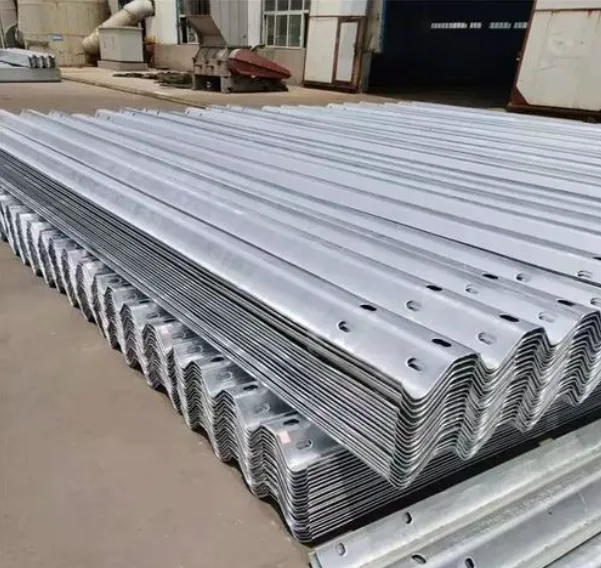
Export guardrails need to withstand long ocean transportation, high salt spray, humid climate, desert wind and large temperature differences. The anti-corrosion standard for export projects is much higher than domestic ordinary roads. Standard 550g/㎡ zinc coating is only suitable for dry inland areas. For coastal and island highway projects, 1100g/㎡–1200g/㎡ heavy zinc coating is required to ensure 15–20 years maintenance-free service life.
Standard export-grade galvanized guardrails feature uniform zinc coating, no missing plating, no lumps, and stable performance on bending and punching areas. Some factories use cheap secondary galvanizing processes, which look similar visually but oxidize rapidly during sea shipment and fail project inspection.
All our export guardrails comply with ISO1461 international standards. We provide SGS zinc layer test reports, salt spray test certificates and mill test reports for batch inspection, customs clearance and project approval.
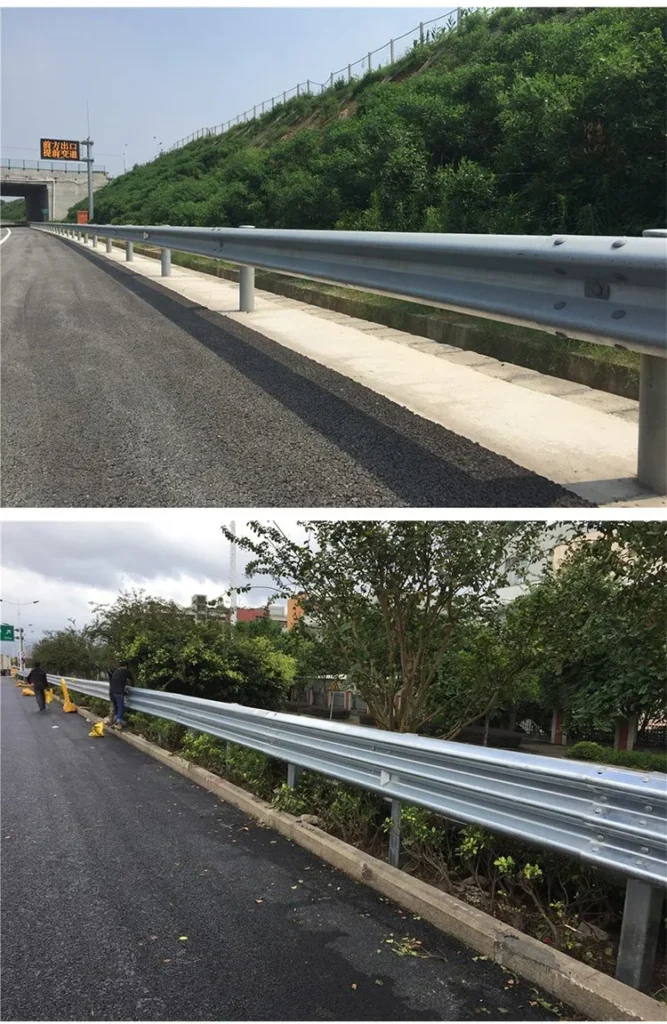
For overseas buyers: Steel thickness determines crash resistance; zinc coating thickness determines project lifespan. Reasonable galvanizing grade selection greatly reduces after-maintenance costs and improves project acceptance rate.