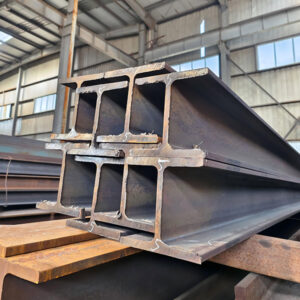
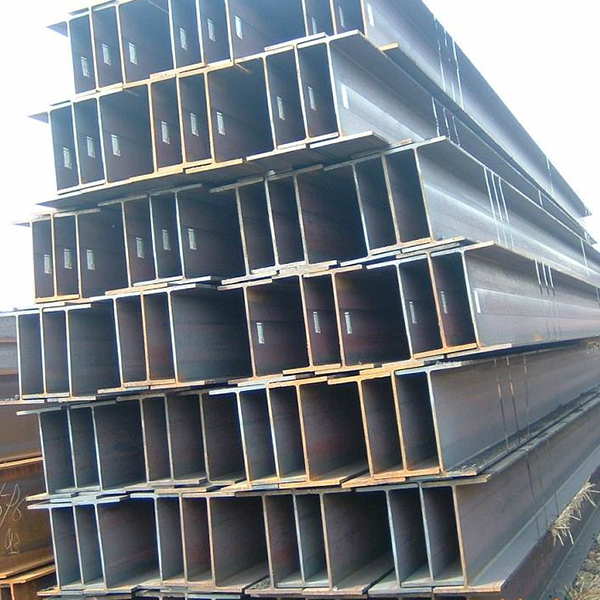
Este producto es una viga H ordinaria, hecha de acero de bajo carbono de alta calidad o acero de baja aleación como materia prima, procesada con precisión mediante tecnología de conformado laminado en caliente. Principalmente cumple con los requisitos de la norma nacional GB/T 11263-2017 y las principales normas internacionales como ASTM A6/A6M, EN 10025 y JIS G 3101. La viga H tiene una sección transversal en forma de "H", compuesta por un alma y bridas superior e inferior, con una estructura razonable y un soporte de fuerza uniforme. Tiene una excelente resistencia a la flexión, resistencia a la torsión y alta capacidad de carga, con un gran momento de inercia de la sección y un peso propio ligero, lo que puede ahorrar eficazmente el consumo de acero y reducir el coste total de ingeniería. El producto tiene una apariencia regular, alta precisión dimensional, una superficie plana y lisa sin defectos obvios, y un buen rendimiento de procesamiento mecánico como soldadura, corte y perforación, que se puede poner directamente en uso sin tratamiento posterior complejo. Como material de construcción básico para proyectos de estructuras de acero, este producto se utiliza ampliamente en estructuras de edificios, proyectos de puentes, columnas de plantas, maquinaria de elevación, ingeniería municipal, construcción naval y otros campos. Puede proporcionar productos personalizados de diferentes modelos y especificaciones según las necesidades del cliente, adaptarse a diversos escenarios de ingeniería de cargas pesadas y grandes luces, y también puede proporcionar informes de inspección de materiales e informes de inspección dimensional para garantizar que la calidad del producto cumple los requisitos de diseño de ingeniería.
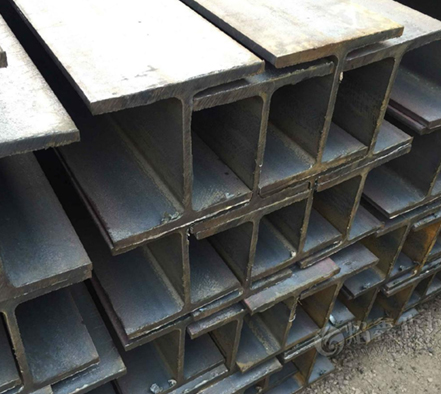
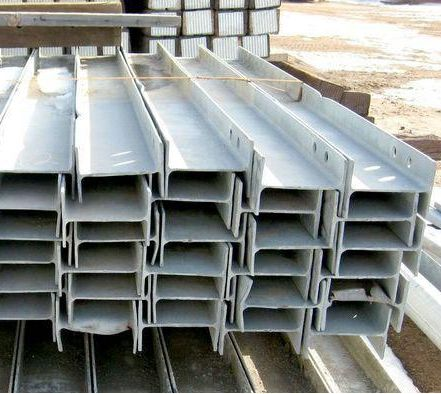
Diferencia entre viga H y viga I
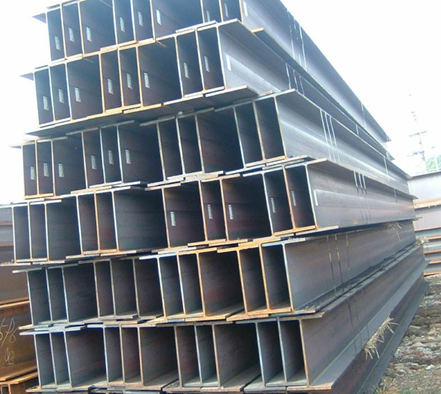
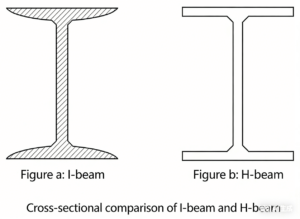
Visualmente, un Viga en H características más amplias y espesor uniforme bridas con bordes en ángulo recto, que ofrecen propiedades mecánicas más equilibradas. Por el contrario, una Viga en I tiene bridas más estrechas con un pendiente interior cónicaEl perfil en H es un legado de las antiguas técnicas de laminado. En ingeniería, las vigas en H suelen ofrecer una mayor capacidad de carga, resistencia a la torsión y eficiencia espacial, lo que las hace ideales para estructuras de acero a gran escala. Las vigas en I, sin embargo, suelen utilizarse en construcciones civiles a pequeña escala o en aplicaciones más sencillas de vigas transversales.
Parámetros del producto
| Modelo de viga H (altura × anchura × espesor del alma × espesor del ala) | 100×100×6×8mm - 600×200×11×17mm (Personalizable) |
| Altura de la sección (H) | 100 mm - 600 mm (personalizable) |
| Anchura de la brida (B) | 100 mm - 200 mm (personalizable) |
| Espesor de banda (t1) | 4 mm - 12 mm (personalizable) |
| Espesor de la brida (t2) | 6 mm - 18 mm (personalizable) |
| Longitud | 6m - 18m (Personalizable, longitud fija) |
| Tecnología de transformación | Conformado en caliente |
| Estado de la superficie | Plano y liso, sin grietas, sin inclusión de escoria, sin defectos evidentes |
| Momento de inercia de la sección (Ix/Iy) | Ix: 1980cm⁴ - 157000cm⁴; Iy: 158cm⁴ - 12500cm⁴ (Depende del modelo). |
| Ejecutivo estándar | GB/T 11263-2017, ASTM A6/A6M, EN 10025, JIS G 3101 |
Composición química
| Elemento | Contenido (fracción de masa) |
| Carbono (C) | ≤ 0,24% |
| Silicio (Si) | 0.17% – 0.37% |
| Manganeso (Mn) | 0.50% – 1.70% |
| Fósforo (P) | ≤ 0,045% |
| Azufre (S) | ≤ 0,045% |
| Molibdeno (Mo) | ≤ 0,15% (Opcional, para el tipo de baja aleación) |
| Hierro (Fe) | Saldo |
Propiedades mecánicas
| Propiedad | Valor típico |
| Límite elástico (ReL/Rp0,2) | ≥ 235MPa - 355MPa (Depende del grado del material) |
| Resistencia a la tracción (Rm) | 375MPa - 510MPa (Depende del grado del material) |
| Alargamiento tras fractura (A50mm) | ≥ 21% - 25% (Depende del grado del material) |
| Rendimiento de flexión | Prueba de flexión a 180°, sin grietas ni deformaciones |
| Dureza (HBW) | 110HBW - 160HBW |
| Resistencia al impacto (Akv, 20℃) | ≥ 34J (Depende del grado del material) |