1. Overview of EN 1317 Standard
EN 1317 is Europe’s unified road restraint system certification standard, assessing containment level, working width and impact injury risk. All guardrails exported to EU, Eastern Europe and Middle East must pass full-scale crash tests for compliance certification. It classifies protection into T, N, H, L grades; W-beam and thrie-beam differ greatly in bearing capacity due to distinct cross-section structures.
2. Structural & Crash Parameter Contrast
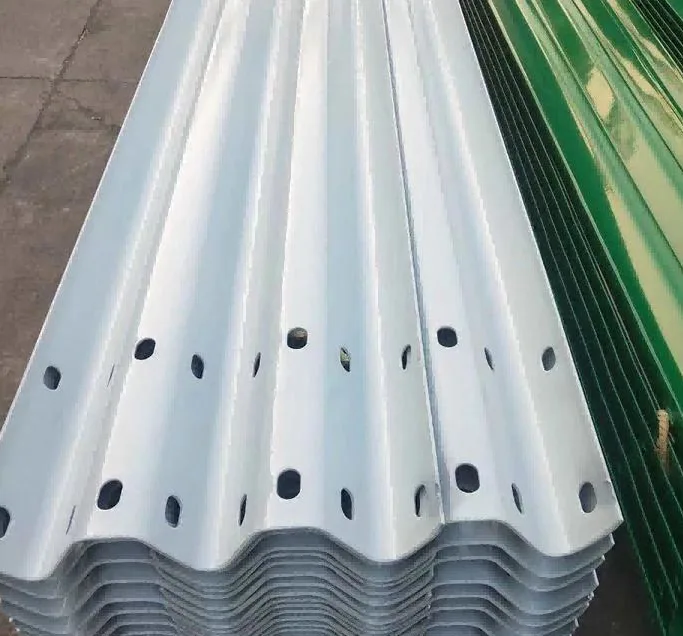
W-Beam Guardrail
Size: 310mm width, 2.5–3.0mm thickness, certified T1-T3/N1-N2 grades. It withstands 1.5t passenger cars at 80–110km/h with flexible corrugation for energy absorption. Its low rigidity leads to heavy deformation under truck impact, with a standard installation height of 730–760mm.
Thrie-Beam Guardrail
Size: 506mm wide, 3.0–4.0mm thick, qualified for N2/H1-H3 high containment grades. It passes impact tests of 10t trucks at 110km/h. The triple-wave design boosts rigidity, disperses impact force and prevents vehicle vaulting, matching 1400mm single-layer or double-layer installation for full vehicle height coverage.
3. Key Crash Performance Differences
1. Containment: W-beam only intercepts small cars; thrie-beam meets mandatory H-grade standards for European highway medians and bridge sections.
2. Space demand: W-beam requires wider roadside clearance; compact thrie-beam fits narrow shoulders and bridge decks.
3. Safety & maintenance: Thrie-beam cuts heavy vehicle rollover risk by 42% and retains structural integrity after collision, greatly lowering post-accident replacement costs.
4. Overseas Project Matching Scheme
• W-Beam: Low-speed rural roads, N-grade low-budget projects with private cars as main traffic.
• Thrie-Beam: EU expressways, steep slopes, ramp exits and H-grade high-safety infrastructure tenders with frequent heavy trucks.
5. Export & Certification Tips
1. Select beam type according to tender containment grade.
2. S355JR high-strength steel delivers better impact resistance than Q235B for passing crash tests.
3. Hot-dip galvanizing zinc layer ≥85μm meets European outdoor anti-corrosion standards.
4. Prepare crash test reports, MTC and EN 1317 certificates for customs inspection.
Conclusion
W-beam offers cost advantages for light-traffic low-protection roads, while thrie-beam provides superior crash resistance for high-speed, heavy-vehicle routes. Buyers should choose products based on tender safety levels, vehicle types and roadside space to balance safety and procurement costs.