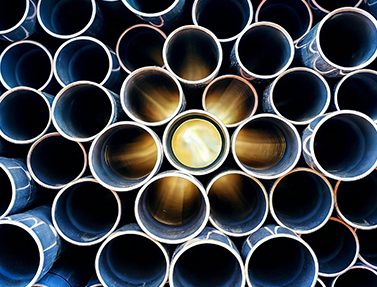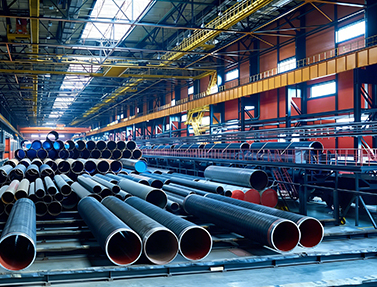
In pipeline construction, fluid transportation, municipal infrastructure and industrial projects, seamless steel pipes and welded steel pipes are two mainstream materials. Scientific selection based on working pressure, service environment, conveying medium, project scale and procurement budget can not only effectively control costs, but also ensure the long-term safe and stable operation of the pipeline system, which is crucial for both domestic and overseas engineering projects.
1. Basic Definition & Production Process
Seamless Steel Pipe
It is integrally formed through hot piercing, cold drawing or hot rolling processes, with no welding seam on the pipe body. The production process is relatively complex, requiring strict control of temperature, pressure and precision to ensure uniform wall thickness and stable internal structure.
Welded Steel Pipe
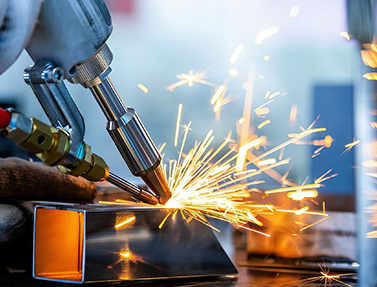
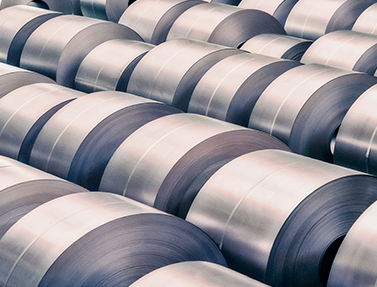
It is formed by rolling steel plates or steel coils into a tubular shape, then welding the joint. According to the welding form, it is mainly divided into two categories: straight seam welded pipe and spiral welded pipe. The production process is simple, efficient and suitable for large-scale mass production.
2. Core Performance Comparison
| Comparison Item | Seamless Steel Pipe | Welded Steel Pipe |
| Structural Strength | High overall strength, uniform wall thickness | Strength weaker at welding seam, wall thickness slightly uneven |
| Pressure Resistance | Excellent, suitable for high pressure pipeline | Ordinary pressure bearing, not fit ultra-high pressure |
| High & Low Temperature Resistance | Stable performance, adapt to extreme temperature | Ordinary temperature resistance, limited extreme environment use |
| Anti-Corrosion & Sealing | Good overall tightness, no leakage risk | Weld joint is easy to corrode and leak in harsh medium |
| Specification Range | Mainly small & medium diameter | Suitable for large diameter, extra-large diameter pipeline |
| Delivery Cycle | Longer production cycle | Fast production, sufficient spot supply |
| Comprehensive Cost | Higher price | Cost-effective, lower procurement cost |
| Main Material Grade | 20#, Q355, L245, L360 | Q235B, Q355B, common carbon steel |
3. Applicable Scenarios
Seamless Steel Pipe Application Scenarios
- High-pressure fluid transportation: oil pipelines, natural gas transmission pipelines, hydraulic pipelines, high-pressure steam pipelines
- Extreme temperature working conditions: boiler tubes, heat exchanger tubes, refrigeration system pipelines, high-temperature flue gas pipelines
- Hazardous medium delivery: chemical corrosive liquids, flammable and explosive gases/liquids, toxic medium pipelines
- Precision engineering: mechanical equipment supporting pipelines, power station auxiliary pipelines, aerospace and shipbuilding pipelines
Welded Steel Pipe Application Scenarios
- Municipal engineering: water supply and drainage pipelines, urban buried pipelines, heating pipelines, ventilation and air conditioning pipelines
- Low-pressure fluid transportation: general water delivery, sewage discharge, compressed air pipelines, ordinary gas pipelines
- Construction and infrastructure: building steel structure support pipes, bridge piling pipes, foundation engineering pipes
- Large-scale engineering: water conservancy project pipelines, long-distance low-pressure water transmission pipelines, industrial workshop ventilation pipelines
4. Foreign Trade & Engineering Selection Suggestions
- For projects with high pressure, dangerous media, extreme temperature or high precision requirements (such as oil and gas exploitation, chemical engineering), give priority to seamless steel pipes, and match corresponding international standards (ASTM, EN, API) according to export regions.
- For conventional low-pressure fluid transportation, municipal infrastructure and large-diameter long-distance pipelines, choose welded steel pipes to reduce procurement and construction costs. Spiral welded pipes are preferred for large-diameter and thick-walled pipelines.
- When exporting to European markets, select EN standard pipes and provide CE certification; for American projects, use ASTM standard pipes; for Southeast Asian, Middle Eastern and African markets, GB or ASTM standard pipes can be selected according to customer requirements.
- For welded pipes exported to coastal, high-salt and corrosive environments, strengthen the anti-corrosion treatment (such as hot-dip galvanizing, epoxy coating) and strictly inspect the welding seam quality to avoid leakage risks.
- Before bulk procurement, confirm the chemical composition, mechanical properties and pressure-bearing capacity of the pipes to ensure they meet the project design requirements.
5. Conclusion
Seamless steel pipes have obvious advantages in pressure resistance, high and low temperature resistance and structural stability, making them the first choice for high-standard industrial and energy projects. Welded steel pipes are favored in municipal, civil and large-scale infrastructure projects due to their cost-effectiveness, complete specifications and fast delivery speed.
Scientific selection based on the actual parameters of the project is the key to ensuring the safety, stability and economy of the pipeline system. Our company supplies a full range of seamless steel pipes and welded steel pipes (straight seam, spiral), covering various material grades and specifications, and can provide customized solutions and complete quality inspection certificates to meet the needs of overseas pipeline engineering projects.